
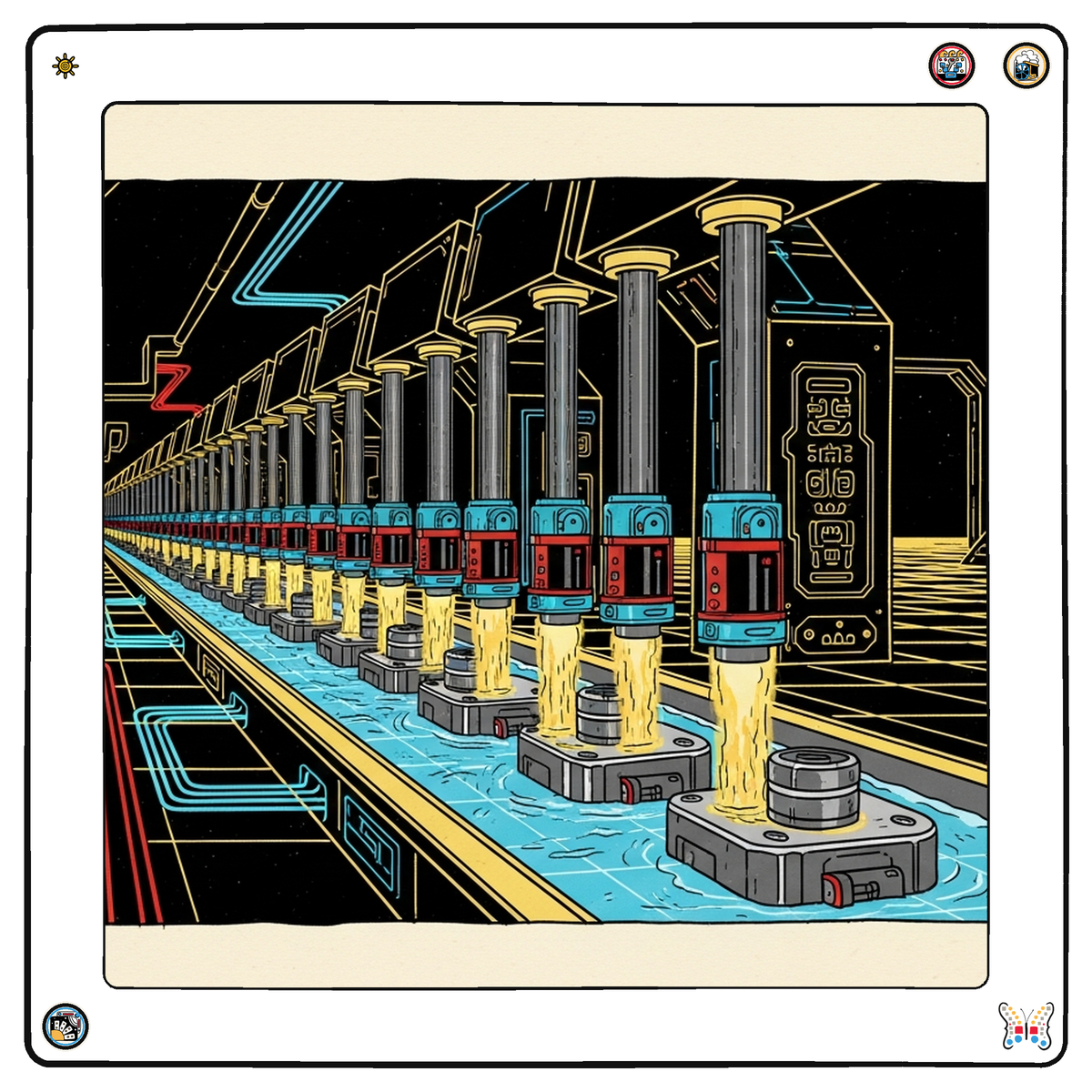
CI/CD is where the API lifecycle stops being a diagram on a whiteboard and becomes an automated, enforceable reality. Continuous integration and continuous delivery — the pipeline — is the machinery that takes the machine-readable artifacts at the center of an API operation and drives every stage off of them automatically: validating, linting, testing, mocking, generating, deploying, and governing. For years I’ve argued that the artifacts are the source of truth; CI/CD is what makes that truth do work. It’s the difference between governance you talk about and governance that actually happens, and it applies just as much to consuming APIs as it does to producing them.
The foundation of API CI/CD is that it has to be definition-driven, not code-driven. I drew this distinction sharply in 2017: the real potential of OpenAPI is realized when you design the contract first and let it drive the pipeline — mocking, documentation, testing, code generation, gateway deployment all flowing from the definition — rather than auto-generating a definition as an afterthought from code that’s already written. Code-driven API deployment is more costly and more rigid, because the code becomes the truth and everything downstream is reverse-engineered from it. Definition-driven CI/CD inverts that: the OpenAPI contract enters the pipeline, and every stage consumes it. This is what makes API-first development real. The four phases I’ve described — specification, development, testing, deployment — are really a description of a pipeline: define the contract, mock and document and debug against it, write and run tests, then integrate those tests into the build with something like Newman so deployment only proceeds when the tests pass, with monitors stood up automatically on the other side.
Git is the factory floor where all of this happens. I’ve made the case repeatedly that Git — GitHub, GitLab, Bitbucket — should be the source of truth for API operations, with the contracts living there: OpenAPI, JSON Schema, APIs.json, Spectral rules, Arazzo workflows, Overlays. You draw the line at source control, version every artifact there, and let CI/CD pipelines and webhooks automate against those artifacts to integrate with whatever downstream tooling you use — gateways, portals, platforms. This is GitOps applied to APIs: the desired state of the API is declared in Git, and the pipeline reconciles reality against that declaration. My own API research has run on exactly this pattern for years — JSON and YAML in GitHub repositories, Jekyll rendering the human interface, machine-readable artifacts driving discovery and operations across hundreds of entity repositories, each carrying its OpenAPI, Postman collection, and APIs.json. The Git repo is the center of gravity, and the pipeline is what gives it motion.
When I studied what API producers actually run in their GitHub Actions pipelines, the pattern was consistent and instructive: validate the OpenAPI, bundle the spec, generate documentation previews, run security checks for leaked secrets, generate SDKs, and validate clients — all triggered automatically on every commit and pull request, with the GitHub repo as the single source of truth rather than some portal off to the side. That’s a concrete picture of API CI/CD: a series of automated stages, each consuming the contract, each gating the next. And the toolbox for those stages is now deep. Linting and governance with Spectral, Vacuum, or Redocly. Validation with APIMATIC or JSON Schema validators like AJV. OpenAPI manipulation with libraries like libopenapi. Collection testing with Newman, Bruno, or Insomnia. Contract and mock testing with Microcks. Code and SDK generation with OpenAPI Generator, Kiota, or APIMATIC. Gateway deployment with the Kong, Tyk, or Zuplo CLIs. Each of these is a stage you can wire into the pipeline, all of them driven by the same machine-readable contract.
The most important thing CI/CD does for APIs is turn governance from theater into enforcement. I’ve been adamant that governance is not just a pile of Spectral rules — it’s process, artifacts, and people working together — but the pipeline is where the rules acquire teeth. Theatrical governance puts “follow the design standards” in a wiki that nobody reads under deadline. Real governance runs the linter on every pull request and fails the build when the contract violates the standard. This is the shift-left idea made concrete: move validation, linting, and testing as early in the lifecycle as possible, so problems are caught at design and commit time rather than discovered in production. Breaking-change detection is the clearest example — diffing the proposed contract against the production contract on every PR and failing the build if a breaking change is introduced without an intentional version bump, the way tools like Optic enable. The pipeline becomes the place where a breaking change becomes a deliberate, reviewed decision instead of an accident. And governance in CI/CD can be rolled out intelligently — by domain, by team, by severity, by maturity — with rulesets centrally managed and published out to individual APIs, so you can dial enforcement up as teams mature rather than imposing the full ruleset on everyone at once.
I eventually started calling the fuller vision “continuous everything.” CI/CD in most shops automates building and deploying code. For APIs, the same pipeline should be automating testing, security, documentation, discovery, support, and communication — all the essential aspects of an API operation baked in as defaults rather than bolted on as afterthoughts. Documentation regenerated from the contract on every change so it never drifts. Discovery artifacts like APIs.json updated automatically so the API stays findable. Security scanning on every commit. Mock servers refreshed from the latest examples. When all of these live in the pipeline, they stop being things someone has to remember to do and become properties of the system. The hard part was never the technology — it was the culture shift required to treat documentation, discovery, and security as pipeline defaults rather than optional extras.
What gets consistently overlooked is that CI/CD is just as essential for consuming APIs as for producing them. The conversation is almost always framed around producers, but every organization is also a heavy consumer of other people’s APIs, and those integrations need the same pipeline discipline. When you consume an API, the provider’s contract belongs in your pipeline: you generate your SDK or client from their OpenAPI, you run contract tests that validate the provider still behaves the way your integration expects, you detect when their contract changes in a way that breaks you, and you monitor your dependencies continuously rather than discovering a breaking change when your production integration fails at 2 a.m. Contract testing — done properly, with complete JSON Schema, agreed constraints, and real negotiation between the two sides, not just auto-generated collections — is what lets a consumer catch a provider’s drift early. Shift-left applies to consumers too: validate your integrations against the provider’s contract continuously in your own CI/CD, so a change upstream surfaces in your pipeline instead of in your incident channel. SDK regeneration in the pipeline keeps your client libraries in sync with the providers you depend on. The consumer’s pipeline is the early-warning system for the integrations the business runs on.
This is also why CI/CD is the natural home for the design-time, deploy-time, and runtime distinction. Design-time governance — linting and validating the contract — happens in the IDE and the early pipeline stages. Deploy-time governance — breaking-change detection, contract testing, gateway deployment from the OpenAPI — happens in the middle of the pipeline. Runtime governance — gateway policies, monitoring, observability — happens after deployment but feeds signals back into the pipeline for the next iteration. The pipeline is the spine that connects all three, and the machine-readable contract is what travels along it. When an API operation works well, you can usually trace it to a pipeline where the OpenAPI flows from a Git repository through linting, testing, mocking, generation, and deployment automatically, with governance enforced at every gate and the same contract serving both the team producing the API and the teams consuming it. CI/CD is where the API lifecycle becomes real, repeatable, and governable — for producers and consumers alike.
References
- Definition-Driven API Lifecycle Instead Of Code-Driven API Deployment
- From CI/CD To A Continuous Everything (CE) Workflow
- Data-Driven Apps At Scale Using GitHub And Jekyll
- API-First Development
- Enabling An OpenAPI Lifecycle
- Detecting Breaking Changes Across API Versions
- Getting Pedantic About API Contract Testing
- What Is API Governance
- What Steps Do API Producers Have In Their GitHub Actions Pipelines
- GitOps-Driven API Source Of Truth
- What API Tools Should I Be Running In My Pipeline
- Roll Out API Governance Rules By Domain Or Team In CI/CD Pipelines
