
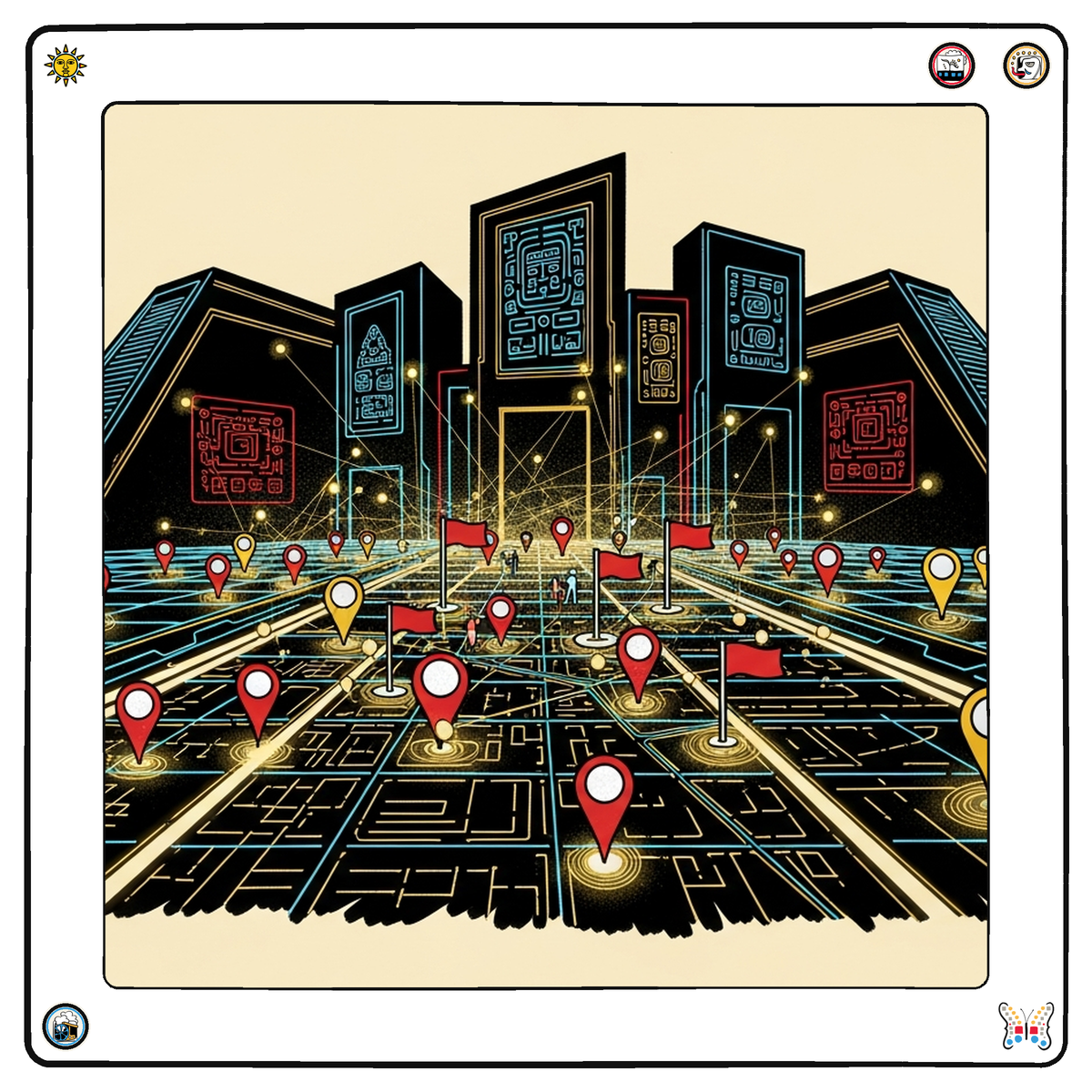
Foursquare is the API that defined the location era — the moment when mobile, social, and geographic data converged and APIs became the way the physical world got wired into the digital one. Foursquare launched at SXSW in 2009 as a check-in app, and its API, which arrived in November 2009, became the center of gravity for an entire category of location-based services. When I think about the history of APIs, Foursquare occupies the mobile-social chapter — the period after the Web 2.0 social pioneers (Flickr, Twitter, Delicious) when the smartphone made location the new frontier, and Foursquare’s venue and check-in data became the raw material that a generation of location-aware applications was built on. Foursquare proved that the physical world — places, venues, the act of being somewhere — could be an API.
The Foursquare API was technically exemplary for its time, and the team was unusually thoughtful about sharing what they’d learned. I wrote in 2011 about wisdom shared from the Foursquare API team — their decisions around JSON, OAuth 2.0, a “REST Lite” approach, strong documentation, and disciplined versioning. The Foursquare API v2.0, which I covered in 2010, brought OAuth 2.0, badges, and venue history, and it became a reference implementation that other API providers studied. This mattered because location was a genuinely hard API design problem — venues are messy, real-world data, constantly changing, with deduplication and accuracy challenges that pure digital resources don’t have. Foursquare’s API team navigated those challenges publicly and shared their reasoning, which made them influential beyond just their own platform. They were one of the API teams whose design wisdom propagated across the industry.
Foursquare sat at the center of a crowded and competitive location API landscape, and that competition is part of what makes the era interesting. When I walked through the world of location and places APIs in 2011, Foursquare was one player among many — CityGrid, Factual, Google Places, Gowalla, and others were all competing to be the authoritative source of venue and places data. My 2012 overview of eleven places-data APIs captured how hot this space was. The competition was over something genuinely valuable: a clean, comprehensive, accurate database of the world’s physical locations, accessible by API, was a foundational resource that mapping, social, advertising, and commerce applications all needed. Foursquare’s bet was that its check-in data — millions of people voluntarily telling it where they were — would give it the best, most current places database, and for a long stretch that bet paid off. Foursquare evolved from a consumer check-in app into a location data company, eventually shifting its business toward being the places-data infrastructure behind other companies’ apps rather than a destination itself.
The business-model evolution is the part of the Foursquare story most instructive for API history. Foursquare started as a consumer-facing check-in game, with badges and mayorships, and a deals API that let merchants create specials — I wrote about the Foursquare Merchant deals API in 2011 as the platform’s attempt to monetize the connection between check-ins and local commerce. But the deeper, more durable value turned out to be the location data itself. Over time Foursquare pivoted from being a place you checked in to being the location intelligence layer underneath thousands of other applications — its Places API and Pilgrim SDK powering location features in apps that most users never knew were running on Foursquare. This is a classic API-economy arc: a consumer product discovers that its real value is the data and capabilities it can expose to other builders through an API, and it transforms into infrastructure. Foursquare became a wholesale location-data provider, which is a more durable business than the consumer check-in app ever was.
Foursquare’s place in API history is as the platform that made location a first-class API category and proved that the physical world could be programmatically addressable. The check-in, which seemed like a frivolous social game, was actually a brilliant data-collection mechanism that produced a uniquely valuable real-world dataset. The lesson I take from Foursquare is about where API value actually concentrates: not always in the flashy consumer experience, but often in the underlying data and capabilities that experience generates, which can be exposed through an API and become foundational infrastructure for an entire category. Foursquare sat at the center of the mobile-social-location convergence, navigated the hard problems of real-world data thoughtfully and publicly, competed in one of the most contested API spaces of its era, and ultimately found its durable value in becoming the location layer that other applications build on. That arc — from consumer novelty to essential infrastructure — is one of the recurring patterns of the API economy, and Foursquare is one of its clearest illustrations.
References
- Foursquare API Version 2.0
- History Of APIs: Foursquare
- History Of APIs: Foursquare API
- Setting The Tone For Your API Terms Of Service
- Wisdom Shared From The Foursquare API Team
- Foursquare Unleashes Its Deals API
- Quick Walk Through The World Of Location & Places APIs
- Overview Of 11 Places Data APIs
- Thirty APIs To Look At When Planning Your API
