
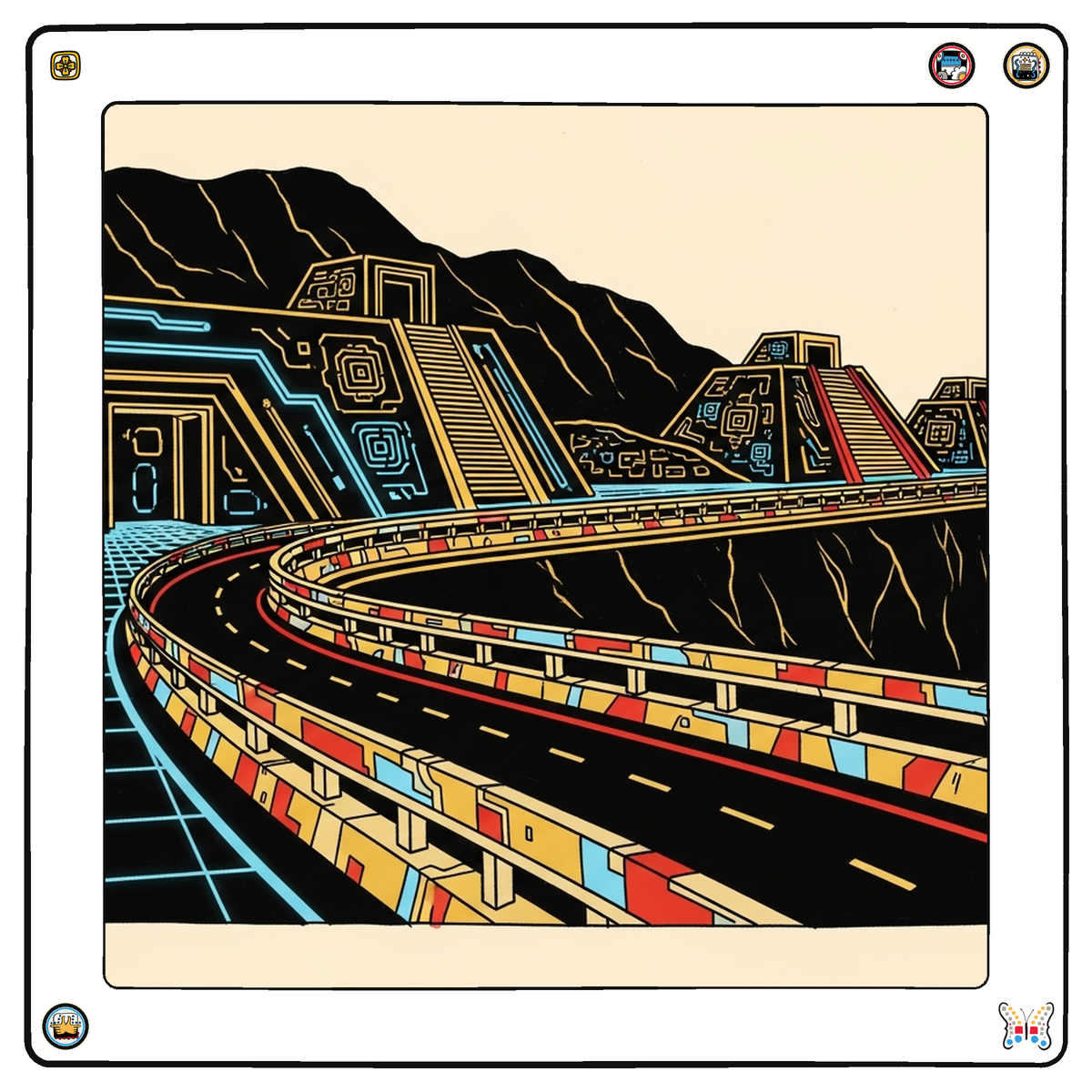
Guardrails is the metaphor that finally makes API governance palatable, and it captures the single most important shift in how I think governance should work. A guardrail doesn’t stop you from driving — it stops you from going off the cliff. It keeps you safe while letting you move at speed. That’s exactly what good API governance should do: prevent the genuinely harmful patterns — the security holes, the breaking changes, the inconsistencies that compound into chaos — while staying out of the way of teams trying to ship. The alternative framing, governance as gates, is what’s given governance its bad reputation: governance as the office that says no, the review board that slows everything down, the bureaucracy that blocks progress. Guardrails reframe governance from an obstacle into an enabler, and that reframing is the difference between governance teams adopt and governance they route around.
The clearest articulation of this I’ve encountered is the guardrails-not-gates framing, which I wrote about in 2026 when covering Supreet Nagi’s handbook on taming the API jungle. The metaphor is precise: gates are tollbooths that stop you and make you wait for permission; guardrails are the highway infrastructure that lets you drive fast and safe. The jungle is what you get with no governance at all — chaos, sprawl, danger. The paved road with guardrails is the goal — a path that’s safe to travel quickly because the dangerous edges are protected. This framing matters because it answers the central objection to governance, which is that it slows teams down. Good guardrails don’t slow teams down; they let teams go faster precisely because they don’t have to think about the dangerous edges. The guardrail handles the safety so the team can focus on the work.
The strongly-typed journey is where guardrails become concrete and technical. I wrote in 2026 about governance rules as guardrails in a strongly-typed journey, building on the strongly-typed API operations idea — the recognition that when your API artifacts are strongly typed (schema-validated, contract-defined) and your governance rules run automatically against them, the rules function as guardrails along the path of development. As a developer works, the schema validation and the linting rules are there, catching the problems at the edges, guiding the work toward correctness without requiring a human gatekeeper to approve every step. The rules aren’t blocking; they’re guiding, continuously, as part of the journey. This is governance as an ambient property of the development environment rather than a checkpoint you have to pass through.
The placement of guardrails determines whether they enable or obstruct, and this is the practical heart of it. Guardrails that fire at the right moment — in the editor as you type, in the IDE, in the CI/CD pipeline at the point of change — guide gently and early. I wrote about just-in-time API guidance for teams, the idea that governance guidance delivered as a teachable moment, linked to a real review or a real change, is far more effective than guidance buried in a document nobody reads. Guardrails work because they’re present at the moment they’re needed, not because they’re a separate process you have to remember to invoke. Rolling out governance rules by domain or team in CI/CD pipelines is how you place the guardrails where the work happens, so they protect without obstructing. The same rule that would feel like a gate if it required a meeting feels like a guardrail when it’s an inline check that fires automatically and tells you how to fix the problem.
Self-service is what guardrails make possible, and it’s the organizational payoff. I wrote about hands-on self-service API governance — the model where teams govern themselves within guardrails rather than submitting to centralized control. When the guardrails are good, you don’t need a central governance team approving everything, because the guardrails handle the safety automatically and teams can move autonomously within them. This is the resolution of the central tension in governance, between control and autonomy. Gates give you control at the cost of autonomy. No governance gives you autonomy at the cost of safety. Guardrails give you both — autonomy within safe bounds — which is why they’re the right model for governance at scale. A platform that injects guardrails into the IDE and Git workflows lets every team move fast while the platform ensures nobody drives off the cliff.
The honest caution I’d add, and which I raised in questioning our API governance reality, is that guardrails are only as good as the judgment behind them. A guardrail in the wrong place obstructs traffic; a guardrail that’s too aggressive becomes a gate by another name; a guardrail protecting against a danger that doesn’t exist is just friction. The art is in placing guardrails where the real dangers are and nowhere else — protecting against the breaking changes, the security holes, the genuinely harmful patterns, while leaving teams free to make their own choices everywhere the stakes are low. And as AI enters the picture, guardrails take on new meaning: governance injected into the IDE via AI, and the broader question of guardrails for AI agents acting on APIs, extends the metaphor into the agentic era. The guardrail is still the right model — let the agent move fast, but keep it from driving off the cliff. The throughline is constant: governance should prevent harm without preventing progress, guide without blocking, and keep teams safe while letting them go fast. That’s what a guardrail does, and it’s what governance should aspire to be.
References
- Strongly Typed API Operations
- What Is API Governance
- Hands-On Self-Service API Governance
- Just-In-Time API Guidance For Teams
- Roll Out API Governance Rules By Domain Or Team In CI/CD Pipelines
- Developers Will Listen When API Governance Is Injected Into IDE Via Artificial Intelligence
- Governance Rules As Guardrails In A Strongly-Typed Journey
- Questioning Our API Governance Reality
- Guardrails Not Gates: Supreet Nagi On Taming The API Jungle
