
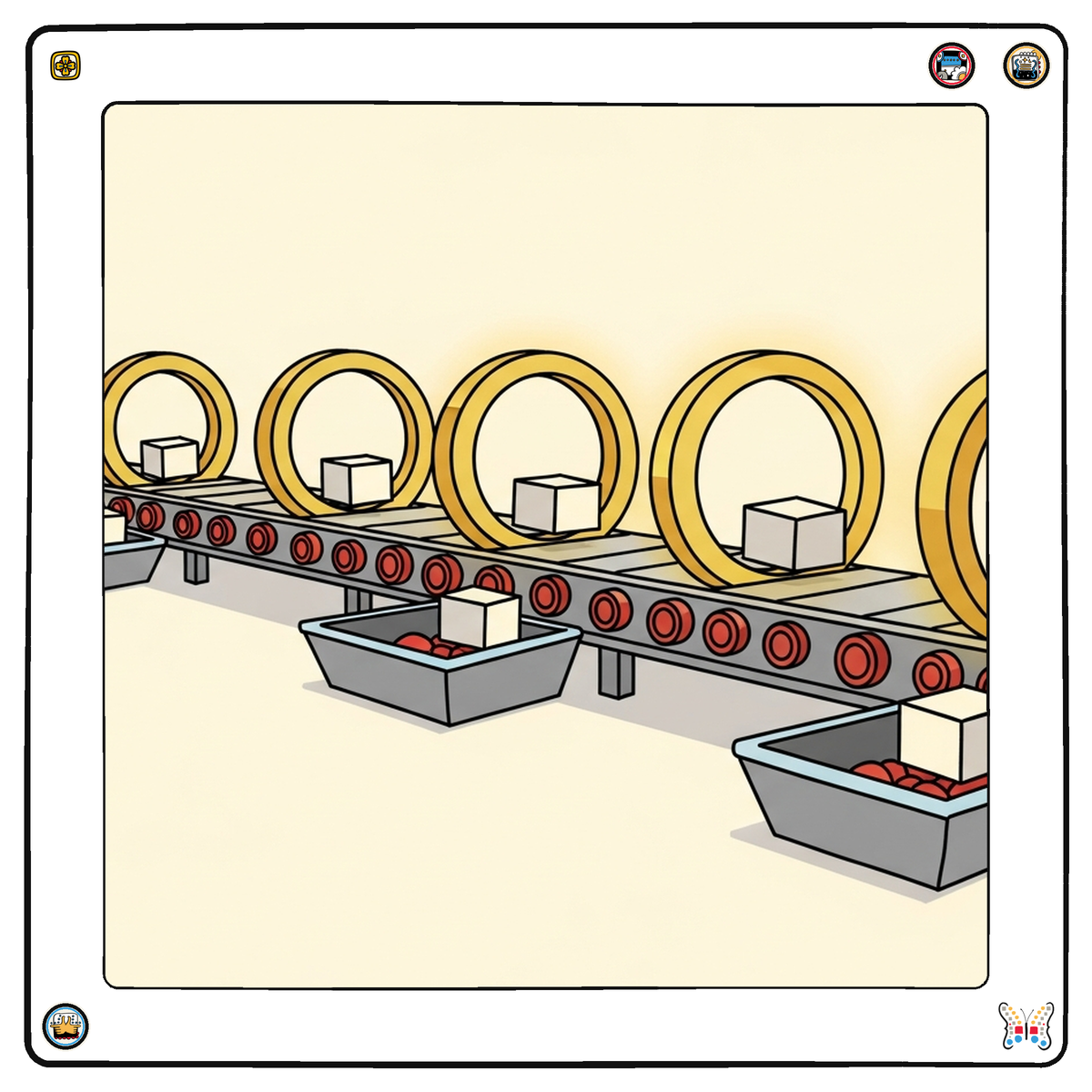
Rules are the atomic unit of automated API governance — the individual, machine-executable checks applied to API definitions to verify they meet your standards. A rule says something specific and checkable: every path must use kebab-case, every operation must have a description, every API must declare a security scheme, every error response must be defined. Rules are what turn governance from a document into an enforceable practice, because a rule can be evaluated automatically against an API definition wherever that definition lives — in the editor, in the CLI, in the CI/CD pipeline. I’ve spent an enormous amount of time working with API governance rules, and my thinking about them has matured from early enthusiasm about their power to a more nuanced understanding of both what rules can do and, crucially, what they can’t. Rules are essential to scalable governance, but they’re also frequently misunderstood as being governance itself, when they’re really just one expression of it.
The foundational question is what the rules of API governance even are, and I worked through it directly. I asked in 2021 what the rules of API design governance are — cataloging the kinds of checks that good governance applies: naming conventions, structural requirements, documentation completeness, security declarations, versioning discipline. These are the substance of what rules enforce. Operational API rules using APIs.json, which I wrote about in 2024, extended this beyond design-time checks into the operational dimension — rules about how APIs are run, not just how they’re designed. The spectrum of rules I’ve mapped runs from simple JSON Schema validation, through declarative Spectral rules, to custom functions for complex logic. Understanding the range of what rules can express — and what each type is good for — is understanding the practical vocabulary of automated governance. Rules are how abstract standards become concrete, checkable requirements.
The operational practice of rules is substantial, and it’s where governance actually gets done. I’ve written about grouping and applying rules using tags, rolling out rules by domain or team in CI/CD pipelines, adding exceptions to rules, calculating rule coverage for an OpenAPI, and naming conventions for rules. The reality is that a real rules-based governance practice isn’t just writing rules — it’s organizing them, categorizing them, rolling them out incrementally so teams aren’t overwhelmed, handling the inevitable need for exceptions, measuring how much of your governance surface the rules actually cover, and naming them consistently so they’re manageable. Baseline rules provide a secure starting point, as I wrote in 2025, and baseline rules for consumption governance, which I wrote about in 2026, extend rules to the consuming side. The operational craft of managing rules at scale — across many teams, many APIs, and the whole lifecycle — is a real discipline, and it’s where governance succeeds or collapses under the weight of unmanaged rule sprawl.
The crucial warning, which I’ve stated as emphatically as I can, is that rules are not the thing. I wrote exactly that in 2025 — API governance rules are not the thing — because the most dangerous misunderstanding in governance is treating the rules as the goal rather than as a means to it. A rule is a representation of what actually matters: the human intent, the business reason, the design wisdom behind it. The rule that checks for kebab-case paths is a representation of a deeper goal — consistency that reduces confusion and friction. When organizations forget this and treat the rules as the point, they optimize for rule compliance rather than for the good APIs the rules were meant to produce. I wrote in 2024 that rules are just a start — you need so much more context for governance to succeed — because rules without the surrounding understanding, agreement, and human judgment produce compliance, not quality. The rule is the tip of an iceberg of human intent, and governance that sees only the rule misses everything underneath it.
The rules-versus-everything-else distinction is part of understanding rules correctly, and I’ve worked to clarify it. Rules are not the same as policies, and neither is the same as guidance. A rule is a specific machine-checkable assertion. A policy is a higher-level statement of intent that rules implement. Guidance is the human explanation that helps people understand and follow both. The mature governance practice connects all three: policies express what matters at the business level, rules enforce it mechanically, and guidance helps humans understand the why. Rules without policy are mechanical checks disconnected from purpose; rules without guidance are enforcement without education. The positive-and-negative dimension of rules adds nuance — rules can reinforce what’s done well, not just flag what’s wrong, turning governance into a learning tool. Understanding where rules fit in this larger structure of policies, guidance, and intent is what keeps rules from being mistaken for the whole of governance.
The forward-looking vision I find compelling is rules as a shareable, marketplace commodity, and it points at where rules are heading. I wrote in 2025 about what an API rule marketplace would look like — a place where governance rules could be discovered, shared, discussed, and reused, with provenance and standards, the way other artifacts are. This makes sense because rules encode hard-won governance knowledge, and that knowledge is worth sharing rather than every organization reinventing the same checks. The Spectral-compatible rule format makes this portability possible — rules written once can run across engines and organizations. The synthesis I’d offer is that rules are the essential, atomic mechanism of automated governance — the machine-executable checks that make standards enforceable at scale across the lifecycle — but they are always a means, never the end. The rule represents what matters; it is not what matters. Effective governance uses rules to enforce standards mechanically and at scale, organizes and manages them as a real operational discipline, connects them to the policies and guidance that give them meaning, and never loses sight of the fact that the goal is good APIs and the human intent behind them, not rule compliance for its own sake. Rules are how governance gets teeth, but governance is the wisdom and agreement the rules represent, and the practitioner who confuses the two — who optimizes for rules rather than for what the rules are meant to achieve — has mistaken the map for the territory. Get the rules right, manage them well, and keep them connected to the human purpose they serve, and rules become the powerful, scalable engine of real governance. Forget what they represent, and they become bureaucratic checks that produce compliance while the actual goal slips away.
References
- What Are The Rules Of API Design Governance
- Operational API Rules Using APIs.json
- API Governance Rules Are Just A Start, You Need So Much More Context For Your API Governance To Succeed
- What Would An API Rule Marketplace Look Like
- API Governance Rules Are Not The Thing
- API Governance Rules Provide A Secure Baseline To Start From
- Adding Exceptions To API Governance Rules
- Baseline Rules For API Consumption Governance
